Empowering Trans Voices: Gender-Diverse Voice Care


Voice plays a pivotal role in conveying one's gender identity. For many transgender and gender-diverse individuals, aligning their voice with their true identity is a crucial step in their journey. Specialized therapies and surgeries offer transformative solutions, allowing individuals to communicate authentically and confidently. This blog delves into the comprehensive approach of gender-affirming voice care, highlighting its significance, methodologies, and the profound impact it has on individuals' well-being and social interactions.
Understanding Transgender Voice Therapy and Surgery
In the journey of self-discovery and affirmation, voice plays an integral role for many transgender and gender-diverse individuals. The way one speaks, the tone, pitch, and resonance can significantly influence how they are perceived and, more importantly, how they perceive themselves.
Definition and Purpose of Gender-Affirming Voice Treatment
Gender-affirming voice treatment is a specialized therapeutic approach designed to assist transgender individuals whose voice or speaking style doesn't align with their gender identity. The primary goal is to modify the voice in a way that it resonates more authentically with the individual's true self.
The Impact of Voice Misalignment on Mental Health and Well-being
A misaligned voice can exacerbate feelings of gender dysphoria, a distress caused by a discrepancy between one's physical traits and gender identity. This misalignment can lead to increased risks of mental health issues, discrimination, and even violence. It's not just about sounding right; it's about feeling right and being recognized and respected for who one truly is.
Voice Therapy for Transgender and Gender-Diverse Individuals
Voice therapy is a non-surgical intervention that employs exercises, feedback, recordings, and practice sessions, either with a therapist or independently. Drawing insights from methods that have most influenced LGBT people, the benefits of this therapy are manifold, from improved self-confidence to reduced feelings of dysphoria.
Key Aspects Addressed in Therapy:
- Voice Pitch: This refers to how high or low a person's voice is and its variation during speech.
- Resonance: It's about how the spaces in the nose, mouth, and throat influence the voice's sound, imparting traits perceived as masculine or feminine.
- Intonation: This deals with the flow of louder or softer sounds when speaking.
- Air Flow and Breathing: Proper breathing can influence the "breathiness" of one's voice.
- Articulation: This focuses on how clearly distinct sounds and words are produced.
- Nonverbal Cues: Beyond voice, gestures, and mannerisms of the head and hands also play a role in gender expression.
Candidates for Transgender Voice Care
Voice therapy is versatile and can benefit almost anyone, irrespective of age or stage in their gender journey. Drawing inspiration from Apple's support for the LGBTQ community, it offers a plethora of options, making it a safe starting point. However, the journey isn't always linear. There might be moments of progress followed by setbacks, but with guidance, the trajectory is generally forward. For some, surgery might be a consideration, especially if they've made significant progress in therapy but still face challenges in certain situations.
Initial Evaluation and Diagnosis
Before embarking on the therapeutic journey, an initial evaluation is crucial. This involves a detailed medical history and a vocal cord examination. Understanding the relationship between the voice box anatomy and the resultant voice is essential.
The pitch of one's voice is influenced by both anatomy and function. The larynx and vocal cords, controlled by nerves and muscles, determine the voice's pitch. A procedure called stroboscopy might be recommended to examine the vocal cords' anatomy and function. This simple test provides insights into how the vocal cords vibrate and function.
Determining Treatment Goals
Embarking on the journey of voice modification requires a clear understanding of the desired outcomes. It's not just about changing the voice but ensuring it aligns authentically with one's gender identity.
- Establishing the Desired Voice Characteristics: Every individual has a unique voice that they envision for themselves. It's essential to have candid conversations with healthcare providers to articulate these desires, ensuring the treatment aligns with personal goals.
- The Significance of Pitch in Gender Perception: Pitch plays a pivotal role in how a voice is perceived in terms of gender. Typically, voices below 165 hertz are heard as male, while those above are perceived as female. However, it's essential to understand that these metrics aren't universal. Some individuals might seek a more neutral or nonbinary voice, emphasizing the importance of personalizing treatment goals.
- Addressing Overall Vocal Health Concerns: Beyond pitch and resonance, overall vocal health is paramount. Years of modulating one's voice can lead to strain, resulting in a voice that might sound weak or raspy. Addressing these concerns ensures that the voice isn't just aligned with gender identity but is also healthy and sustainable.
- Voice Surgery for Gender Affirmation: For those seeking more permanent or pronounced changes, voice surgery offers transformative solutions.
Overview of Surgical Procedures for Voice Modification
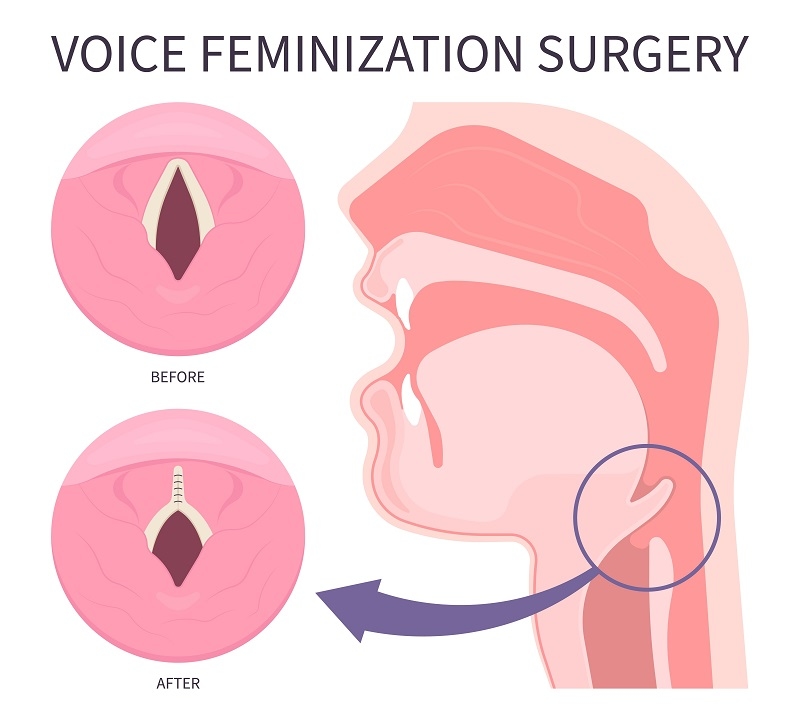
Voice surgeries, primarily endoscopic, involve modifying the vocal cords to align the voice with the individual's gender identity. These procedures can either raise or lower the voice pitch, depending on the desired outcome.
Endoscopic Operations and Their Benefits
Endoscopic surgeries involve inserting a tube (endoscope) into the patient's mouth to access the larynx. These procedures are minimally invasive, leading to quicker recovery times and reduced risks.
The Distinction Between Voice Feminization and Masculinization Surgeries
Voice feminization surgeries aim to create a higher, more feminine voice by tightening or reducing the vocal cords' thickness. On the other hand, masculinization surgeries, though less common due to the effects of hormone therapy, aim to deepen the voice.
Post-Surgical Care and Therapy
After surgery, the journey isn't over. Proper post-operative care and therapy are crucial for achieving the best results.
The Importance of Post-operative Voice Therapy
Voice therapy post-surgery helps individuals adjust to their new voice. It provides exercises and techniques to ensure the voice sounds natural and is used healthily.
- Adjusting to the New Voice and Building Muscle Memory: The post-surgical voice might initially sound unfamiliar. With time, practice, and therapy, individuals build muscle memory, making their new voice second nature.
- Addressing the Needs of Professional Vocal Artists: For those who use their voice professionally, like singers or voice-over artists, post-surgical therapy is even more crucial. They need to relearn and adjust their techniques to their modified voice, ensuring they can perform at their best.
- The Impact on Quality of Life: Voice surgery goes beyond physical changes. It has profound psychological and social impacts, enhancing the quality of life for many.
The Transformative Power of Voice Surgery
Having a voice that aligns with one's gender identity can be life-changing. It boosts self-confidence, reduces feelings of dysphoria, and allows individuals to present their authentic selves to the world.
- Increased Comfort and Confidence in Self-expression: With a voice that feels right, individuals often find themselves more willing to speak up, share their thoughts, and engage in social interactions.
- The Profound Effect on Overall Well-being and Social Interactions: Beyond self-expression, a congruent voice can lead to improved mental well-being. It reduces the stress and anxiety associated with being misgendered and allows individuals to navigate social spaces with increased confidence and ease.
You may also like: What Are Some Good LGBTQ Books For Pride Month & Beyond?
Final Thoughts
Voice modification, whether through therapy or surgery, is a transformative journey for transgender and gender-diverse individuals. By aligning voice with identity, it fosters authenticity, boosts confidence, and enhances overall well-being, allowing individuals to navigate the world as their true selves with renewed vigor and joy.
This content was created by AI